Earlier today I did something I have been meaning to do for ages: I applied to be a Google Trainer. I have been working towards this for at least the past year, though something else has always come up (for example, I applied for and was accepted to the Google Innovator Academy) but I have been chipping away at what I needed to do.
I figured that since I am presenting so often, and starting to create a lot of videos for my YouTube Channel, that Trainer was definitely the next logical step. My hope is that having that certification will 1) give me the key to another group of educators who can grow my own capabilities when it comes to all things Google and 2) open up some opportunities that may not have been available without it.
A few weeks ago, I made my trainer video. It's not as flashy as my Innovator Video, but I'm pretty pleased with it. Have a look at it if you'd like.
I should know in 4-6 weeks whether or not I've been accepted.
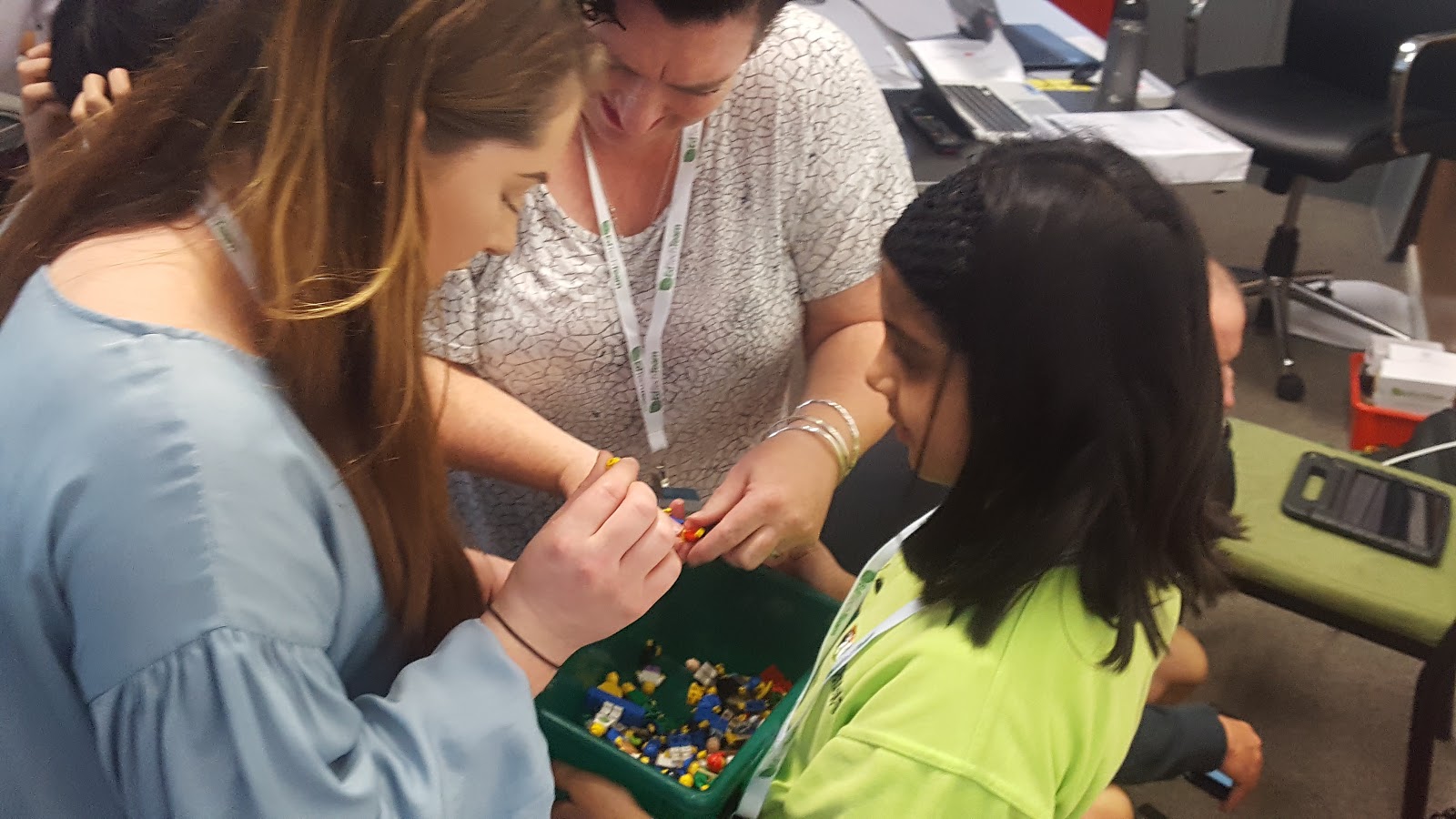
This week I did something that I've wanted to do for a while now: bring learner presenters to an adult conference or summit. After my previous attempts to do something even grander failed, I wasn't going to take no for an answer in bringing children to the EdTechTeam Auckland Summit.
We had a busy term so our preparation was left to the last week of term. Maybe that was not ideal, but it was enough. The plan was to bring 16 of our learners and all four learning coaches from our Habitat. We had four presentations and they were all scheduled for the first day of the summit. We worked extremely hard over those five days at the end of the term. The learners actually were given a lot of leeway to come up with what they would say. I made the slides for the sessions and practiced with them, but for the most part they were on their own.
On the day, I was nervous and the children were nervous. We arrived fairly late due to one of our learners not showing up on time. I guess that was to be expected. We managed to get everyone lanyards and some nice free Google Cardboards courtesy of EdTech Team (who were extremely supportive of what we were trying to do for our learners).
For the most part the children weren't too interested in what the adults were saying (though some were) but they came prepared and even if they weren't listening, they all had a device to do something on while we adults were being inspired.
Overall, the children did an AMAZING job in the presentations. They were clearly nervous and some of them spoke extremely softly. Others forgot their lines or got mixed up, but the issues were minimal. Where they absolutely shone, though, was when they were helping out the adults at the sessions. Several of the children chose to stay back in the room with me and help out at the sessions that weren't theirs. They were so excited and happy that they knew more than adults and that they could show them how to do things they couldn't do. On the drive home, one of the girls told me that that was the first time that she had told an adult what to do.
The day was a complete success and the feedback from all four sessions was overwhelmingly positive. I'm excited to go back after the school holidays and see the effect it has on them.
An interesting side note to the whole day, was that they were clearly more up to date on some new features in YouTube than many in the audience - a fact that was continually brought up on the second day of the conference.
I'm so proud of all the learners who came with me to share. They were very brave and they took advantage of an opportunity that they were given. I definitely will look at increasing the frequency of events like this in the future.
Since I've started working in an open plan environment (or whatever else you'd like to call it) one of the biggest challenges has been organizing the stationery. Some learners could see 3 or 4 adults in a given day and their books could potentially be in all different places. Last year we would have books thrown on the floor and the children would pick up theirs if they needed them. This was not a great system (nor was it one that we came up with - it was the children problem solving given the situation they were in.
Last year we trialled a lot of things. In our environment, though we had 90+ children, we had four smaller groups and often we organized things this way. Since we were a Year 3/4 split Habitat, I had my learners split their books and pencil cases up by Year and Gender. This system worked a lot better than the previously mentioned one, as children only had between 5 and 8 books to sort through to find theirs. There were still bottlenecks at certain times.
We tried giving each child a cubby hole. The problem was that were were (almost comically) short for one per child. So we tried to compromise and put two children per cubby. The messy outcome of that was that we were beginning to get a bit frustrated.
Then, in one meeting we had an idea. We ordered 100 of those magazine containers that so many of us use for reading books or what have you. We could fit two in each cubby and that would give enough space for all the children. Their mess would not stop their cubby buddy. So we tried that and it worked well enough. There were LESS bottlenecks (they weren't completely gone) and most problems were solved.
This year our school took notice of the success we had and we ordered one for every child. We have four houses (or Whanau) at Ormiston so we got four colours and matched them up as best as we could (orange and red are close, right?) and called them ketes. Wonderful. We put them in four corners of our Habitat (since our temporary space has NO cubbies) by Whanau, and we've asked the children to carry them with them. We've been very clear about what goes into them (just their school stuff - it's not a locker or a desk).
It has been amazing and we've had very few issues with lost books (and even then, it's usually the adults who have them) or bottlenecks. And if the children bring them, they have everything they could possibly need, so there is no need to run the 100m across the space to get their eraser or lucky pen. It's definitely an idea worth looking into if you've had similar problems.
It's been a while since I've been able to update any progress on my Innovator Project, due to several events beyond my control, but over the last few weeks, I've been able to renew my focus on these parts of my life and make some fairly significant progress.
I think the timing of this can be quite helpful, because I know several NZ schools have not really been able to implement the new Digital Technologies Curriculum. The goal of this project is help educators implement computational thinking into their program, so there's no judgement here, just resources and assistance.
New Videos
I've managed to finish my third video for Coding Across the Curriculum and then start and complete the fourth. I've included the two here for anyone and everyone to try out themselves or with their learners. The first is focussed on making stories with Scratch and the second will help you learn how to make calculations - both simple and complex - using Scratch.
The actual process of making the videos is becoming easier with each time - though I'm still pretty nervous when filming and often trip over words - sorry about that.
Using the Videos
I've been able to do some real world testing with several of the videos I've made. With my Habitat of 89 learners, we've worked in pairs to make a quiz each. The children had a lot of fun doing this and were, for the most part, able to follow along with that video on their own. Several of the children added their own extras to the work they were doing, which was a nice added bonus. We were able to have some good conversations about coding - which was really the whole goal of the process. I even saw some children use a quiz in Scratch for their iExplore (basically Genius Hour) project. It was nice to see that in action. I did find that the Choose Your Own Adventure video was a bit harder for the children (aged 7-9) to understand, but many of them did get it.
So my recommendation to anyone out there: just give the videos to your students. Let them have a go. If you don't know how to code, do it alongside them. Start the conversation. It's not about being expert coders, but it is about being creative and solving real-world problems and learning how to think logically.
Or, as an educator, you could watch the videos and learn how to do the coding projects on your own and then teach them the way you want. They are meant to help you and help your learners develop this skill and way of thinking.
Where to Next
I'm not sure how many people will make it this far into the post, but I do have a few exciting things in the pipeline.
First off, there are more concrete plans for future videos. The next video will show how to make an interactive display (much like you would find in a museum) and future videos will deal with art, music, VR, spreadsheets and more. Now that I've found a rhythm in making these, the plan will be to have a new one every few weeks. At least that's the plan.
There are two more next steps that I am in various stages of implementing and a third one that will possibly be a bit further off.
The first new thing that I'd like to announce officially here (and announcements on Twitter and Facebook will follow in the coming days) is that there will be a MakerEdNZ newsletter. The current plan is to have a monthly, one page newsletter that will have links to various resources or videos. There will be a coding tie-in, which will highlight a specific coding block or command (and linked into a video which uses the same block or command), a link to a Digital Breakout and some links to ideas that can be used in the classroom. If you are interested in subscribing to this newsletter, please fill out the subscription form below. I expect the first issue to be ready to be emailed out in mid-April.
The second thing I'm starting to explore will be a coding contest. I'm likely to make this NZ-wide. I've still got to work out MANY details of this, but it is definitely in the pipeline and I would like to do this before the end of 2018.
The third thing I'm looking at doing is to start some free meet-ups for educators who are interested in discussing or learning about coding. I want to focus on the other things at the moment, but am definitely open to anyone who is willing to help me run these. But this may be something that comes about in 2019. We shall see.
So that's where things stand at the moment. I'm pretty excited about all the ideas I've been getting the last little while and the fact that now I've got a resource of four videos (over an hour of content).
Have a look at the videos, and if you have feedback it will be greatly appreciated. If you like the videos, subscribe to the channel and use them with your learners. The support will help and it lets me know that they are being used.
Look forward to some new updates in the coming months and in the meantime SUBSCRIBE to the upcoming newsletter.
Last week, as an add-on to a staff meeting we were shown this video about goals. Even though I made a few wisecracks about it while watching it, there are some important concepts within it that are beneficial to think about when it comes to any job, but especially education.
The video explains that goals are not necessarily the best thing to have. For example if your goal is to walk 10000 steps a day, once you reach it, it is pretty anticlimactic and you end up having to set a higher goal - say 11000 steps or more per day.
The video then explains that it is more productive to have a system in place, rather than a goal. A system, according to him, is setting aside a specific amount of time to work on something. For example, our principal suggested setting aside one afternoon each week to do a certain task that many of the educators don't really enjoy doing - but can be overwhelming if not done. Instead of making the goal of finished x amount of tasks per week, the idea is to work on it x amount of time.
In my mind this is all semantics and is the difference between a result-oriented goal and a process-oriented goal (and that's how I'm going to refer to it in the future). At the end of the day, it's still a goal, but it's a more manageable goal that doesn't come with as much stress to finish something.
I run a a lot (or at least I used to) and I've always adhered to this idea. When I planned what I would do each week, I focused on how much time I would run each day, NOT on how far. Thus, I made sure I put in the time to get better, but I put no pressure on myself if I wasn't feeling great that day. Eventually, putting in the time works a lot better as you don't feel like you've gotten behind on things.
So this past weekend, I tried doing just that. I said to myself that I would spend an hour on my weekly planning and I kept to it. I felt afterwards that I had been more efficient than I usually was, as I was on a bit of a deadline. I also felt like I was more focused on the task at hand because I wasn't thinking about how much longer I had to work to get it all done, but how much longer I would work until I could move on to something else.
This is also about wellbeing. It's so easy in education to keep on working. The job is never really done. I can't count how many balls I'm trying to juggle at the moment (and that I've not done a good job of for the last few months - exhibit A would be the time between this post and the previous one).
My next step is to make a weekly schedule to make sure that I'm doing the things I need to do regularly. So it will be an hour for activity x and 30 minutes for activity y. This should help me be more consistent with things such as my Google Innovator Project (it's been a long while), this blog, more breakouts and more math videos - not to mention enjoying other aspects of my life!
I'm pretty sure that I've previously mentioned some offshoots of my Google Innovator Project, but I haven't yet talked about one of ones I've spent more time on than the others: my Maths Strategy Videos. I essentially have had this idea for a few years now, but have kind of sat on it for a while because of time and not really having the confidence or motivation. That all changed with making videos for breakouts and coding.
I've used videos before in my mathematics teaching but often it was hard to find ones that aligned with what I was meant to teach. I've also been taking an online course through Stanford University and Jo Boaler that's been encouraging me to make maths more visual.
When planning my videos I wanted to be able to show learners a variety of ways that they could visualize a problem or strategy. But I also wanted to make the videos short and sweet. Admittedly I do feel like an amateur, both with the quality of the videos but also the content.
I've tried to get lots of feedback (and I've gotten a bit from my immediate colleagues at Ormiston) but I still doubt that I'm showing the strategies the best way I could. At the end of the day though, it's another resource for children to use in order to understand mathematical concepts.
So why do I think this is a good idea? I've noticed that many children do not feel very confident in maths class. Their brains seem to shut off the moment you say "It's time for maths." For many children these are difficult and abstract concepts to understand and they are likely taught way to quickly. I wanted to give them a chance to review the lessons at their own pace. I also wanted to make it possible for me to do the work of 10 educators at the same time. All learners have different needs and this helps me meet them.
Ideally, I'll be able to cover all the different strategies in the NZ curriculum and beyond. In my future, utopic maths classroom, my learners would learn at their own pace, watching the videos and completing the work as fast or as slow as they could. I would act as a guide and facilitator - making sure they got the help they needed and that they were moving forward as they understood new concepts. This would go alongside collaborative, mixed-achievment problem solving, with (hopefully) rich mathematical discussions.
I've also started thinking of other ways I can flip the classroom. Watch for some writing videos coming soon...
Here is the link where I'll be housing all of the videos as I make them. I'll likely also have some sort of progressions where the videos can be linked to the curriculum.
Since I returned from Sydney in August, my work on my Innovator project has been somewhat uneven. I initially did a lot of planning but had lots of work at school to do. During the school holidays I got a good amount done, but have since slowed down. Still, I've managed to make some pretty good progress and follow some pretty interesting tangents to my project so I thought I would share my journey up to this point.
The Good News
I've managed to make two videos. To be honest I didn't think that I would be this far along at this point, so that's pretty good. Both videos were shot and edited during one week, so if given the time, I know that I can produce these at a fairly good rate.
I've also received mostly positive feedback from the educators that have used the videos, and many are looking for more. So that's also exciting. One of the bits of feedback I got was from Tim Bell, a Professor of Computer Science at the University of Canterbury who has been significantly involved in both CS Unplugged and the creation of the new Digital Technologies Curriculum here in New Zealand. I had also previously attended one of his workshops in Christchurch (CS4PS) that has been instrumental in my understanding of computational thinking. So that was a pretty big deal for me. His advice was extremely helpful and will hopefully be seen in some upcoming videos.
I've also had a chance to try out one of my videos with my own learners, which was part of the reason for picking that idea. The early responses were very positive. The children were able to complete the task, with very little extra input from me, which made it much easier for me to manage another group (see some comments below about that). The idea of teaching this way is probably something that is going to increase more and more in the future. It frees up educators to do what educators do best: guide children. It allows children to learn at their own pace. Some people may say that getting a robot to do an educators job will not be as good, but I say that they've made educators do robots' jobs for so long it's about time we did what we can do to be more impactful. I'm not saying videos should be used exclusively, but if a child can learn from a video of me doing something, that allows me to teach a lot more children and frees me up to support them in other ways rather than just content delivery.
Another thing that has come out of this is that I'm learning a lot more skills for producing videos. There has been a quick learning curve and I imagine that as time goes by I'll have to learn more out of necessity. Already I have been looking at ways to improve sound quality and I want to work on video quality as well (I'm not so sure filming with an iPad is the best way to go, so we'll see).
Overall I'm extremely please with the progress so far.
The Bad Stuff
One of my biggest frustrations at the moment is time. There is just not enough of it to do everything I want to do AND have a life outside of school. For various reasons, most of my out of school time has been focused on non-school activities - which is the way it should be, to be honest. That means though, that I have been much slower at putting the videos out that I thought I could be after making the first two. My plan was actually to have three done before school had started this term because I was teaching both ideas and it would have allowed me to see how two different videos would work in a classroom setting. That being said, it's probably best not to pressure myself too much, as I've also managed to create some other things on the side, due to the skills I've learned making these videos.
The Interesting Tangents
At least two other projects have come out of this journey so far, and I'm planning a few more as well. The first one (which I've actually written about already) was the digital breakouts I've been making. The second, which may actually have the potential to be more impactful on education than either of the others is that I've started making a series of videos to show a variety of math strategies. It was a convergence of a lot of things all at the right time that got me started on this and when I shared the first 8 videos (they're a lot quicker to make) the response was more positive than any of the other resources. But these resources will be shared in more depth in a further blog post.
Other things that have been happening as a result of this is that I'm getting contacted by more and more outside agencies and people (which reminds me I need to get back to them). This is certainly an area that I'm looking towards developing as my focus is shifting from my own classroom to a larger scale (potentially global at this point).
Where to Next
For my project, my future plans are to continue to make the videos. My next one (which I've got the script half finished) will be on making stories with Scratch, while the fourth will shift gears a bit and focus on debugging (which has come out of some discussions with others about the new curriculum). Beyond that we'll see. Hopefully that can be completed before the end of the school year (December) and I can use the holidays to make a few more. Ideally this will be alongside more breakouts and maths videos.
I also want to start looking at Phase Two of the project: starting meetups for educators who want some support or who want to share. In the coming weeks I will put some feelers out through Twitter and Facebook to see who is interested and will hopefully be able to plan something for late January or February next year. I'm getting a bit excited about this as bringing more people on board might make this project take off a bit more.
I've got to remember that things start slowly. If I only have two videos it's not as useful as if I have a whole collection. Once things are made it will be a bit easier to have an impact, but like I mentioned above, it's all about finding the time.
I'm going to leave you with the two videos I've produced so far. Feel free to share them and use them as much as you'd like. I always appreciate feedback on what I've done so that I can improve what I'm making. Subscribing to the MakerEdNZ YouTube Channel would also be greatly appreciated and make sure you got emailed about new videos.