Pages

Showing posts with label Conferences. Show all posts

Tuesday, August 14, 2018

#HiveSummit Day 9 - Dave Burgess & Teaching Like a Pirate

Today I watched the 9th and last video from the Hive Summit. I am a bit saddened that it is over, but I've had a great time (even though it's been very hard to fit them all in - what with New Zealand being in the middle of term and all) and got lots of ideas.

This last video starred Dave Burgess of Teach Like a Pirate Fame where he talked about a variety of amazing ideas that any and all educators can learn from. He first started telling us about how he came to be where he is. A long time ago (or maybe it wasn't all that long ago) he was doing some great things in his class. But not many people knew about it. One day he decided to present at a conference and from there things started snowballing. He shared a lesson that he learned and that lesson is to share. Dave suggests that everyone should take a chance, be brave and present. By doing this, it makes you think and reflect upon what things you're doing that are awesome and amazing (and no doubt, everyone is doing something awesome and amazing). It's a chance to start a conversation and to help improve your own practice. In my experience, you don't need to have a perfectly formed idea to present, all you need is an idea.

Dave then goes on to talk about those ideas. Not every idea that you hear, even if it's a great idea, will be one that you want or need to adopt in your classroom. And that's ok. We are all individuals and all have different ways of doing everything. There is no one right way to do anything and as educators I think we need to embrace that. Learn about a lot of different ideas and then take the best of everything that will work for you. Mix and match. There are so many great ideas out there and so many ways to inspire children. Do what makes you the best educator that you can be. And don't forget to share the things you're doing so that others can take the best bits of what you do. I like how I summed it up in a tweet best:


He also talked about how often he would go to conferences to present, and how he spent a lot of his own money and time to get out there. That naturally led into a talk about what you can do if you can't afford that or there isn't anything near you. He talked of a ski and snowboarding resort that would sometimes not get snow. But when there was no snow, they didn't just close up shop. They made their own snow. If you don't have access to the community that you need to grow, make your own. Or join one of the myraid of online groups (that's been a pretty big theme throughout all nine videos) and join the community. These groups are not about listening to one person and everyone copying those ideas in the classroom. It's the mix of people that make the PD and the space what it is, not the person in charge. The main point is though, to find a group that works for you.

Some other great advice that was given in the talk was that at the beginning of the year you should spend the first few days on making your classroom or learning space a safe and exciting community. You want to make children so excited on the first day that they can't wait to come back on the second. Most classes (I know I've done this) spend lots of time going over all the minutiae of the rules and regulations but is that what you want children to go home thinking?

He also spoke about putting on a show. Often people get confused and think that you have to be "on the stage" all the time. But that's not what he's advocating. Spend a little bit of time on the show, get the kids hooked in (love the pirate analogy for this) and then have them doing the amazing things that will help them learn: collaborating, connecting and creating. He says, and I completely agree: "We want makers not memorizers; creators not consumers."

I have thoroughly enjoyed this talk and every other Hive Summit talk. I hope that I've managed to help amplify the amazing voices and ideas of those that were sharing. I'll leave you with what Michael Matera left us at the end of the video, because it's such a good message:

Be mindful, be awesome and always be in motion.


Monday, August 13, 2018

#HiveSummit Day Eight - Joe Sanfelippo & Hacking Leadership

I'm slowly getting to the end of the Hive Summit and I'm continuing to be inspired by the amazing people and amazing topics being discussed. The penultimate video has Joe Sanfelippo discussing ideas around Hacking Leadership, or how to be an effective leader. This topic is (like many of the other topics) near and dear to me. I am taking up one of my first official leadership positions very shortly so I'm looking for ways to help build something amazing.

In a very enthusiastic way (gung ho might be a better word to describe it), Joe tells us about three things that are important for leaders to do: Be intentional, open doors and build staff. 

Being intentional is something that leaders, whether you're leading a classroom, team, school or district need to think about. It means that you do things for reasons; that there's always a why to your actions and that why has to do with the results you want to achieve. A lot of this revolves around role modelling, but also includes making choices in when and how you do things. An example he gave was that in Wisconsin, many people would be watching Green Bay Packer games on Sundays. If you want to share on social media, some people would be sharing things at the same time commercials were on for the games - that way when people went to their social media feeds theirs would be the top stories. I think that example is the best because it just shows the cause and effect relationships between actions and desired outcomes. As a leader you need to think like this in order to help accomplish what you want. Be VERY mindful of how to achieve your lofty goals.

Opening doors is the idea that you need to share what you're doing and put yourself out there. This doesn't mean necessarily sharing what an individual is doing, but what the collective team is doing. It's never really about me, or I. It's about we and us. Letting the world know the things that are going on in your school is important to starting and continuing a dialogue.

This can be a very scary idea for many. There is a lot of judgement that occurs, but in order to accelerate our progress we need to share what we've done and what we're doing. There are many different ways to share, and not one is better than the other, though it does change your audience slightly. The point isn't which platform you should share on, but that you should share. Make things visible and transparent.

Building staff is very important. As Joe said in his talk, you need to make people feel like they are a apart of something bigger than themselves, like they are not isolated and like they have control of the direction of whatever organization they are a part of. There's nothing worse if you just go to work (or school) and someone tells you what to do and doesn't let you grow. Joe spoke of something that my new school is in the process of doing, and that's Passion Projects for staff. I can't push that idea any more. It's absolutely brilliant. I've been facilitating projects like this with students for years now, and it only makes sense to allow educators to do the same - but authentically, not based on someone else's ideas.

While watching this, I couldn't help but notice a huge link to the Project Culture Shift ideas that I've been learning about lately as well. The four main areas for that are: Collaboration, Agency, Risk Taking and Curiosity. I think the ideas that Joe spoke about in his talk align completely with this, and since I'm going to be a part of that, his ideas have helped me with some really good ideas and insights.

This was yet another amazing Hive Summit talk. There's only a few more days left to watch the videos so I urge you to do so if you haven't yet. And you're reading this and it's too late, look these people up, read their books, see what they're doing. There's tons of amazing ideas in this!


Friday, August 10, 2018

#HiveSummit Day Seven - Sarah Thomas & Connecting with Educators

The seventh day of the Hive Summit has brought the shortest video so far (which is great because I was able to watch it during my lunch 'hour'). In this video we got to listen to Sarah Thomas discuss making connections with other educators. I really believe in this topic and, to be honest, feel like this is perhaps the most important idea shared in the Hive Summit, solely because this summit would not even be possible if not for these online collaborations and connections.

Most people reading this probably have twitter (I think most of my readers come from there) so I don't know if I need to talk about how amazing it is as a platform, but perhaps there are those who don't know much about twitter chats.

Twitter chats are probably one of my favourite forms of PD, and not because I get lots of good ideas - and I definitely get lots of those. They're one of the best experiences for me because of the connections with other educators and the relationships I've formed through them. If you've never felt the joy of meeting a twitter friend in real life for the first time, you're missing out on quite a bit.

Twitter chats, as Sarah points out, can be quite a scary thing if you've never been to one. She related a story of the first time she tried to join a chat. She asked permission to join. Well no one responded to her so she took that as she wasn't invited. Thankfully, she kept trying and soon found out that you don't need to ask for permission and joined in. Now she runs her own chat. She talked a bit about getting on to twitter and some of the mistakes to avoid. As a new person to twitter (and I found this as well) it's easy to think that you need to follow everything and read every tweet. While that may be possible when you have 50-100 people you're following, but it soon gets to be too much after a while. Other people are worried about following too many people or getting too many people to follow them. Michael Matera suggested that no one should "fear the follower." Twitter is all about connections and the more you have the more rich your PLN becomes. You never know what any connection could lead to. You could be working with someone in your network - many jobs do come out of twitter connections.

At the end of the day, it is all about finding your tribe - the people who are on the save wavelength as you. The people you can talk to and that will push you to be the best you. But they'll also be there to support you. Once you find your tribe, you'll know. Without twitter (or other connections) it's pretty hard to do this.

Sarah has also stated EduMatch whose goal is to help connect educators with similar interests from around the globe. They even have branched out to other social media platforms, such as Voxer. They've had so many people join, they've had to create more than one group (because they've reached the limit!).

She finished with giving us some advice on what next steps we could take: The first bit of advice is to take advantage of online learning opportunities (like the #HiveSummit!). Share your thoughts, reply to others and find other ways to participate. The more voices, the more ideas. The more ideas the better we can all become. The Hive Summit is not the only online summit; there are educamps online. The in-person educamps are amazing, but sometimes you just can't get to where they are. Find one online and join in.

The second bit of advice was that if there isn't this opportunity for you, why not create it for yourself and others? Make the spaces where people can collaborate. Organize a way for like-minded people to connect, whether it be online or in person. These things would not happen were it not for someone or a group of people who spent some time and effort to make it happen. (And on that note, a BIG thank you to the organizers of the Hive Summit!)

The last bit of advice Sarah gives is that you should be prepared to have everything change for you. If you start connecting online, you'll start to think in different ways and learn new things. You will change. Learn to embrace that change. Since I've joined twitter, it's changed me constantly and continues to do so. I've not looked back since!


Thursday, August 9, 2018

#HiveSummit Day Six - Michael Matera & Gamification

Another Hive Summit video, another day of my mind being blown wide open.  Today's talk was with Michael Matera and his daughter Mila, who was interviewing him. They spoke at length about Gamification in the classroom.

The first point that Michael made was that there is a difference between Gamification and Game-Based Learning. Gamification is using elements of games that increase engagement and enjoyment in the curriculum. Game-Based Learning is taking a existing (commercial) game and adding elements into it to make it more educational.

Michael gave many reasons why we schools should adopt gamification: It is naturally student-centred, it is iterative so it allows students to push themselves to become better and it's excited. My favourite thing he said though, had to be this:

I think it's really important that we add game elements to our teaching as well as play elements. I've had many discussions with people about play-based learning lately and I honestly feel that play is really just another word for learning. Gamification clearly falls into the same category. We learn so much, especially with a quick feedback loop which games and play provide, it doesn't make sense that we're not all trying to exploit these amazing ideas.

All of this fit perfectly in my view of what I was going to hear today. Then my mind got blown in the next part. You see, I had thought I knew what gamification is, and certainly I wasn't WRONG in my thinking. But I wasn't thinking big enough. I thought that gamification was playing games in the class. But in some places the game IS the class! That's right, the whole class is pretty much one big game. That's amazing. To be honest, I shouldn't be so shocked. I did read a whole book about a class that kind of did this in the World Peace Game.

So you can imagine that right now, being employed at a school that hasn't opened up yet and having lots of time to plan and work with others to design a whole curriculum and way of teaching, my mind is on overdrive as to how this can be used. I'm honestly incredibly excited.

Michael gives three big tips in the video for anyone wanted to start out:

1) Theme: Choose a theme for your game. This doesn't have to be the topic you're covering, it just has to be how you'll frame the game. You'll need to rename parts of the class to fit the theme. The more elaborate you are, the more interesting it will be for the children.

2) Team: Have the children work in teams. The bonds they make and the skills they learn from this collaboration will be more important that the points they earn. Keep track of points in as simple or as complicated a way as you'd like, but don't tie these points to actual grades and don't take points away that have already been earned.

3) Tasks: Have a lot of these, some required some not. Have side quests that students can complete to earn items in the game which might give them special abilities (eg, getting more points in a review game, being able to get an answer once on a test they don't know, being able to work with a buddy on something, etc). Give badges to show accomplishments as well as experience points (XP).

I honestly plan on having a good look at these ideas and trying to make some sort of a game for the new learners I'm going to have in 2019. In the meantime, I'm going to try to check out Michael's Book (Explore Like a Pirate), his Website of resources and his YouTube Channel:


I am truly inspired by this (and every other talk from the Hive Summit, which Michael has been hosting. I look forward to the last three videos and I imagine I'm going to have a lot of thinking about some amazing things soon.


Tuesday, August 7, 2018

#HiveSummit Day Five - Matt Miller & Using Technology Better

It seems that every time I get to listen to one of the amazing Hive Summit talks, two more have been added. I'm falling further and further behind, but the content continues to amaze!

The fifth talk was by Matt Miller, and it touched on a lot of things that I like already - but still somehow managed to expand my ideas and thoughts on everything. It just goes to show how we're all still learning.

The first part of the talk centred around what technology really is and how it is used in the class. Essentially technology is a tool that is meant to make our lives easier and more efficient so that we have time to do other things. We have gone a bit off course in a few different ways when it comes to this. All too often, digital technology is used a pretty much 1:1 substitution for textbooks or workbooks. Other times we teach only with the tech, thinking about what we can do with a new tool. We often forget that we don't just equip ourselves with one tool (a hammer, for example) and try to do lots of different things with it. We use a variety of tools to do a job. But also, sometimes we get what a previous session identified as functional fixedness with some tools and apps. We often think that we need loads of apps to do each different job. But sometimes we need to start thinking about how we can use one tool to do a lot of different jobs. The two previous ideas seem to contradict each other, but I think that the ideal is to find something in the middle: find a variety of tools, all of which have multiple uses.

Which brings me a very relevant part of the conversation for me: Google Slides. I've actually been asked to do a 30 minute talk tomorrow on all the different things I could do with Slides, so this is something I have been thinking about lately. Slides is an extremely versatile app. You can make stories with it (and include my other favourite resource - Lego):


You can do animations with them (just press play to start it): 


There are also a variety of other things you can do (hmm, maybe this is something I should do as a presentation somewhere). The point is that they are versatile. The other point is that even if you can't get a specific app (for example Instagram) you can mirror the experience in another app. You could use Google Slides (and have a page for each learner) and they could make an Instagram story on their page to show a moment in a book they've read, as an example. I really like this idea, and it sounds like something I'll be doing in the near future with the children that I work with - and maybe even the adults!)

The last part of the talk was devoted to discussing how to and why you should connect with classrooms around the globe. This is also something I have done a lot in the past, so I completely see where he's coming from. Matt and Michael Matera discussed to side effect benefits of doing these. Not only do children get a chance to see that they have similarities to children around the globe (Matt told of a story where on a call one child started doing the floss, which led to all the children doing the floss), but they also see that there are differences between them and others and that there are other ways of doing things or other ways of thinking. It opens children's minds and allows them to gain empathy. Plus they learn a lot when they're on the calls.

I obviously already drink the cool-aid that Matt is selling, so I'll echo what he has said (though he says it more concisely than I do). I think he's spot on that we need to find ways to leverage technology to make our practice better - to make things run more smoothly so we, and our learners, have more opportunities to learn and create and do.

I'll leave you with the advice he gave at the end of the talk: 
Be a maverick teacher. Take risks and change things up. There is so much value in trying something different, we'd be silly not to!


Sunday, August 5, 2018

#HiveSummit Day Three - Rick Wormeli & Grading

Day three of the Hive Summit brought a very in depth discussion of grading and it's usefulness in the classroom with Rick Wormeli. Being in New Zealand, I do feel like we are slightly further along this journey than most, but Rick made it very obvious that there is still a ways to go - for me at least.

My first little issue though (and maybe this is just the difference in mindset) is that throughout the whole conversation, much of the language used centred around "grades" rather than "assessment." I think that in itself is a big mind shift, that maybe hasn't happened everywhere yet.

Rick opened his talk with a discussion about why grading is not only inaccurate, no helpful but often unethical. Most of us have probably been in a class where we're given quizzes and then tests. Many times these quiz scores are averaged out and then mixed in with the test scores to give a final grade. But the quizzes often test the same things as the tests, and if we're truly trying to measure learning, then why would we include our earlier, less competent versions of our work in our final grade. How is that an accurate assessment of what we've learned. He suggests going to a standards based way of assessing learning - ie are you able to do something or not. Often we get so caught up in trying to come up with a grade or mark (or level, in the case of NZ), we forget what the actual goal is. And sometimes teachers like to play 'Gotcha' or punish children with low grades for low effort.

Another point that was touched on was HOW to make the change towards a better way of assessing children. Though we want to move things forward, they are not things that happen overnight and can be fraught with lots of dangers on the way. The first step though, can be to fulfil the marking requirements of a school or district while still changing things enough so that the students' best interests are in mind. So for example, weighting things differently, or giving a minimum grade (say 50% is the lowest grade possible) so that actual progress or achievement is measured. The second thing is to start volunteering for committees that can make the changes needed. Stand up and be heard. A third thing to remember, is that if it comes down to causing political problems versus serving the students, you will have a tough choice. Rick says that his students' needs will win every time, and I applaud that.

As educators we need to focus on the positive, rather than counting errors and adding them up. What can a child do, and what do they need to learn how to do next? What could they improve upon and how can they do so? We need to help set goals alongside our learners and then celebrate when they achieve them.

In the end, with most things, it comes down to being a reflective practitioner. It means going out there, hearing different voices, seeing what people are trying, reflecting on what you're doing and why you're doing it. Ultimately we can only control what we do, so confronting others about their practice and backing them into a corner is no way to foster systemic change - in only creates resentment. Change is difficult and often it involves us feeling as if we've lost a part of ourselves. That's natural. But it doesn't mean that we should continue to do things that have negative consequences just so that we can feel good about ourselves and previous choices.

I probably have not done a very good job of summarizing this talk, so I suggest you go watch it yourself. There is great advice for everyone in there, no matter how far along you are in your journey to create authentic, accurate and useful assessment.


Saturday, August 4, 2018

#HiveSummit Day Two - Carrie Baughcum & Sketchnoting

Day two of the Hive Summit included a talk about Sketchnoting by Carrie Baughcum. I was interested in this talk because I've slowly had my eyes opened with respect to Sketchnoting over the past few months and was keen to learn a bit more. And boy did I.

I used to think of Sketchnoting as something people would do to take notes during a conference. Then I started seeing notes everywhere and reading about people who had done them. But I never really thought much about them until recently, and I certainly hadn't really thought too hard about using them in the classroom as a tool.

In her talk, Baughcum told the story of how she accidentally became a Sketchnoter by drawing with her daughters at the kitchen table to running challenges on her YouTube Channel:


What was most interesting about the talk for me, though, were the discussions around 1) the benefits of Sketchnoting with respect to learning and 2) the idea that you don't need to be an artist to be a Sketchnoter.

Baughcum explains in the talk that as humans, we are very visual beings, and the visualization with the added kinesthetic boost from actually making the drawing helps us improve retention, comprehension and focus and also has a calming effect.  I shared this point on twitter and it started a conversation where the idea of people who don't or can't visualize came up:


I think Carrie's response sums up the whole idea. The more ways we can get children to understand something, the better their understanding will be.

The second point brought up in the talk was that you don't need to worry about the quality of your Sketchnotes. Sketchnoting isn't about the end product and doesn't have to be neat and tidy. It's about the process our brain goes through. She stresses that if you want your learners to have very deep understanding, you need to sketchnote alongside them, failures and all. If you're not a great artist, it may in fact be better as you can model the real purpose of the sketchnotes and help the children feel less conscious about the quality of their icons.

On a meta level, here's a sketchnote that was made for this talk:


I know that the next time I have my own class (probably February, so a ways away) I'm going to introduce sketchnoting. Thank you Carrie!

It was a very interesting talk and I would encourage all educators if they have the time right now to sign up for the Hive (Summit (the link's above) and have a watch of this and the other sessions. There's one a day for several more days, but they won't be up forever.


Thursday, August 2, 2018

#HiveSummit Day One - Rabbi Michael Cohen

A few weeks ago I signed up for the Hive Summit, an online summit that would include several speakers over a week or two. You still sign up for it on the site.

The first video came out yesterday and featured Michael Cohen (no, not the one that's making the news in the US right now - Rabbit Michael Cohen, who was a keynote at ISTE recently). He spoke at length about Creativity, Design Thinking and Entrepreneurship.

It was an amazing talk to start off the summit, and I hope that future videos are just as impactful and inspiring.

Cohen first talked about the nature of creativity. He says (and I've thought this for a long time) that creativity isn't invention, it's the taking of existing ideas and putting them together in combinations that no one else has done before. His example is of Steve Jobs, who took a lot of existing technologies and combined them to make an iPhone. Cohen (and cohost Michael Matera) also argues that creativity isn't an innate thing, but that it needs to be practiced to be improved.

In a discussion around the 30 Circles challenge (where the challenge is to use 30 circles to draw everyday items in 3 minutes) he brought up the idea of Functional Fixedness. That describes the idea that often we think that something only has one use and one use only. We don't always see the different way something can be used and therefore cannot think creatively. However, once we discover our limitations it opens up our minds to different ways of thinking. This activity can lead to very rich discussions about what creativity is and how it can be fine tuned.

The second part of Cohen's talk has to do with Design Thinking (DT). This is something near and dear to me and has been something I've been working on understanding and implementing for the past year now.  Most people who learn about DT know that it centres around empathy and finding ways to solve a problem for someone else, or as Cohen puts it:  "Let me understand you, so that I can help you solve the problem for yourself." He goes on to explain that DT helps us build better relationships. Despite the obviousness of his statement, I had never actually thought of this before. DT makes us think about someone else's needs and helps us work with them. This is definitely something which will help frame my interactions with DT in the future.

In the last part of his talk, Cohen discusses building an Entrepreneurial Spirit amongst our learners. That simply means that we want them to have that grit and resilience to keep going when things don't work. To keep on trying things and trying things until we get where we want to get. He says that big things happen due to years of effort, but that we only see the end part of that effort. We miss the failures and the late nights and all the sacrifices and think that making something new is all about being famous and reaping the rewards of the hard work that we never saw. I tweeted out a quote from this part of the discussion and I think it's so relevant to everyone, especially schools. My future school also needs to look at this and find our own path to success and not be blinded by the amazing schools we see.


This was an amazing talk and I recommend it for EVERYONE. Understanding the things Michael Cohen is saying is something that will help bring any school forward into the 22nd century and beyond. I am so excited to continue doing the things I was doing and adapting those new ideas he has given me.

Here's a sketchnote of  the talk (I didn't do it) that was included in the materials for the talk: 


If you haven't signed up already, I urge you to do so as this was an amazing talk! Watch this space for some more reactions to the talks that I watch.

Monday, July 30, 2018

ISTE 2018 Takeaways

It's been over a month since ISTE 2018 ended and I left Chicago (and over two months since I posted here!) and I finally feel like I have been able to digest a small part of what happened there. For me, there were three major pillars to the value that ISTE provided. Every year I go, and this is my fourth year, I've enjoyed a big jump in my outlook, skills, abilities and connections, and this year was perhaps the biggest jump for me - though it's still quite a task to figure things. I'll do my best to simplify a complex few days. If I wrote everything that comes to mind, you'd be reading a novel, not a blog post.

He Tangata, He Tangata, He Tangata
There is a Māori saying, asking what the most important thing is and the answer is the people, not once, not twice, but three times. By far the most important part of ISTE is the people, and if it weren't for the people, there would be no point in me going.

One of the difficult things about being an educator and trying to do innovative things is that not everyone is on board. Many people don't have trust in you and often work against progress. It is at events such as ISTE where I find my tribe. These are the people that give me the energy to fight for what I believe is best for the learners in my care. These are the people that inspire me to be a better me. These are the people who make me question the things I do and the practices I preach. They give meaning not only to my career, but also to my life. The five days I spent at ISTE each year help me through the tough times in the other 360.

This was my first year at ISTE as an Innovator and I was lucky to connect with a group of other Innovators, especially the ones from Canada.


This group of people were so inspiring to me and took me under their wing, making the week so much more special. I also had the opportunity to connect with some friends from NZ:


To make a long story short, I felt at home amongst the people in Chicago and that is so important when you're trying to do great things.

The New(ish) Tools
I've put tools in the middle of my three takeaways as it's probably the least important, but it's also the most practical. The two main themes I noticed this year througout the week were Geo Tools and AR and what better way to show them, but talking about Tour Creator, which is a combination of the two. If you've ever wanted to create your own Google Expedition, this is how you do it. It's super simple and in the week I had to try this with children, almost all of them completed a short tour and every child was super engaged - especially when we pulled out the Google Cardboard to have a look at them. There are loads of other Geo Tools that can be used (and I've seen them around for a while and every conference or summit always has a steady diet of session on the topic), including Tour Builder (not the same thing, though easily confused), MyMaps, Expeditions (now with AR!) and others.

The other tool that I saw a lot was VR, and specifically I looked at CoSpaces (and Merge Cube) a bit. It's quite easy to fall down a rabbit hole when you start looking at VR creation, so be careful. I also learned a little bit about Unity, which, when I tried it with year 5 and 6 children was a bit tricky - though the accessibility of tools like this is promising and is definitely something to think about if you've got older children.

One of the small things that I saw was that there is now a chrome extension that will allow you to add audio to Google Slides! It's aptly called Audio Player for Slides. Definitely worth checking it out if you've ever wanted to add audio to a slide deck.

I have also developed quite a nice appreciation for sketchnoting, especially after taking a quick lesson from a couple of my new Canadian friends. I'm not really one for taking notes, either written or sketched, but I personally find the sketches much easier to follow and more fun. So I'm going to do my best to get more people doing them so that I can have access to more sketch notes. I don't think its too difficult though. I just want to get a device that can do it all (it's funny the things you don't know about).


Obviously there were more tools showcased (including a new Sphero, which I'm not sure if I'm even allowed to talk about here, but if you're going to get new Spheros, I'd wait a few months), but these were the biggest takeaways when it came to tools.

The Possibilities
ISTE fundamentally changed me this year. A byproduct of hanging out with a group of people who have done amazing things is that doing amazing things becomes the norm. When you hear people talk of writing their books, it becomes the normal thing to do. What I realized - and I mean really realized - is that there is practically no difference between myself and those people other than the fact that they've already done something really big.

How did this happen? Well, the Innovator program (and to a slightly lesser extent, the Trainer Program) has opened up many doors for me. I've probably been trying to go through more of them than I possibly could go through, but there was a convergence of a lot of these things at ISTE that made me feel empowered to do practically anything. The first was that I was given the opportunity to work at several booths in the Expo Hall and join in on other presentations. Spending time doing these things only helped further connections to others and plant a lot of seeds of ideas in my head. The Innovator Energizer, too was amazing. Just being in a room with so many inspiring people (and feeling Imposter Syndrome) was an amazing start, but then learning about Project Culture Shift (and joining in on the fun) was something else.

It was also a chance to start some conversations with people about collaborations, and things I've wanted to do for a while. But now those thing are starting to become a reality.

To put it simply: I've got plans. Lots of plans. Whether they come to fruition depends on how much time and effort I have and am willing to spend on them, and on getting others on board. Big things don't just happen on their own or by one person.

So here's to looking forward. Here's to new connections that haven't even been made yet. And here's to changing the world for better.

ISTE is an amazing experience for anyone, though I'm not sure if everyone takes advantage of its opportunities the way I have and will continue to do so. This is the start of something big. Watch this space for updates in the near and far future. But for now, my advice to anyone reading this: go to ISTE 2019. I'll see you there!

Wednesday, April 25, 2018

Stepping Out of My Comfort Zone

This past week, I attended the Whangarei EdTech Team Summit. After a few years of presenting (and having recently brought my learners to present at the Auckland Summit) I felt it was time to put my hand up for some new things. So when I got an email from the event organizer asking for someone to do an Ignite talk, I put my hand up and replied straight away. It was something I was starting to become keen on over the last few months. I had actually committed to doing one at Global Education Day during ISTE this coming June, so I thought this would be a good intro and first go at it.

Then, at the Summit, there was a call for presenters to do a Demo Slam. I'd never done one of those, so I thought I'd give that a go to. I was extremely nervous about both talks, but I managed to get up in front of everyone (how much harder could it be than a regular session) and do my best.

The first one up was the demo slam. You're meant to have 3 minutes, but I feel like I only used 1 of them. My demonstration was about how you can link Google Slides from one file to the next if you copy the pages. An interesting time saver if you track a lot of progress from learners and don't want to open 20 or 30 files at a time. It didn't win, but the one that did (from a wonderful new member of my digital tribe - Lindsay Wesner) hit right to the heart of a pain point for educators - marking.

I was pretty nervous and probably went through my demo too fast. That's what happens when you're nervous, I guess.

I didn't have much time to fret about that as I had to finish up my Ignite talk and slides. I spent a good amount of time practicing my pacing, and cutting out the unnecessary words.

The next morning I was pretty nervous for the talk, but I felt ready. I sat through the first two ignites and very quickly, it was my turn. We're all our own worst critics, so I was pretty hard on myself, but I also went about it with some perspective. So I'll start with the positive:

I think my message was good, and for the most part cohesive and what I said followed a logical path. I think that I adapted well when things weren't working properly (the slides weren't advancing as easily as I thought they would, and I had some initial trouble with hooking up my chromebook, though I'll attribute that to nerves).

There were, however, a few areas where I could improve upon. For starters, I felt as if I had my head buried in my tablet (which had my script on it). Normally when I talk, I wing it. Every time. I know the main points I want to say, but often ramble and go in an illogical way. An ignite talk is meant to be short and precise. So I made sure I did that. The problem was that I wanted to make sure I said everything as planned. And due to nerves and a lack of confidence, I had a hard time taking my eyes of my script.

That being said, I had at least two attendees give me some really positive verbal feedback. AND while reading, I kept on seeing a lot of twitter notices come up, which meant I was getting a lot of positive feedback online.

Have a view of what I said. Feel free to give me any more advice that I may have missed. It was a scary thing to do, but I'm glad I did it and I'm looking forward to doing it again in another capacity, somewhere.


Saturday, April 21, 2018

This is Something New: Learners at the Google Summit

This week I did something that I've wanted to do for a while now: bring learner presenters to an adult conference or summit. After my previous attempts to do something even grander failed, I wasn't going to take no for an answer in bringing children to the EdTechTeam Auckland Summit.
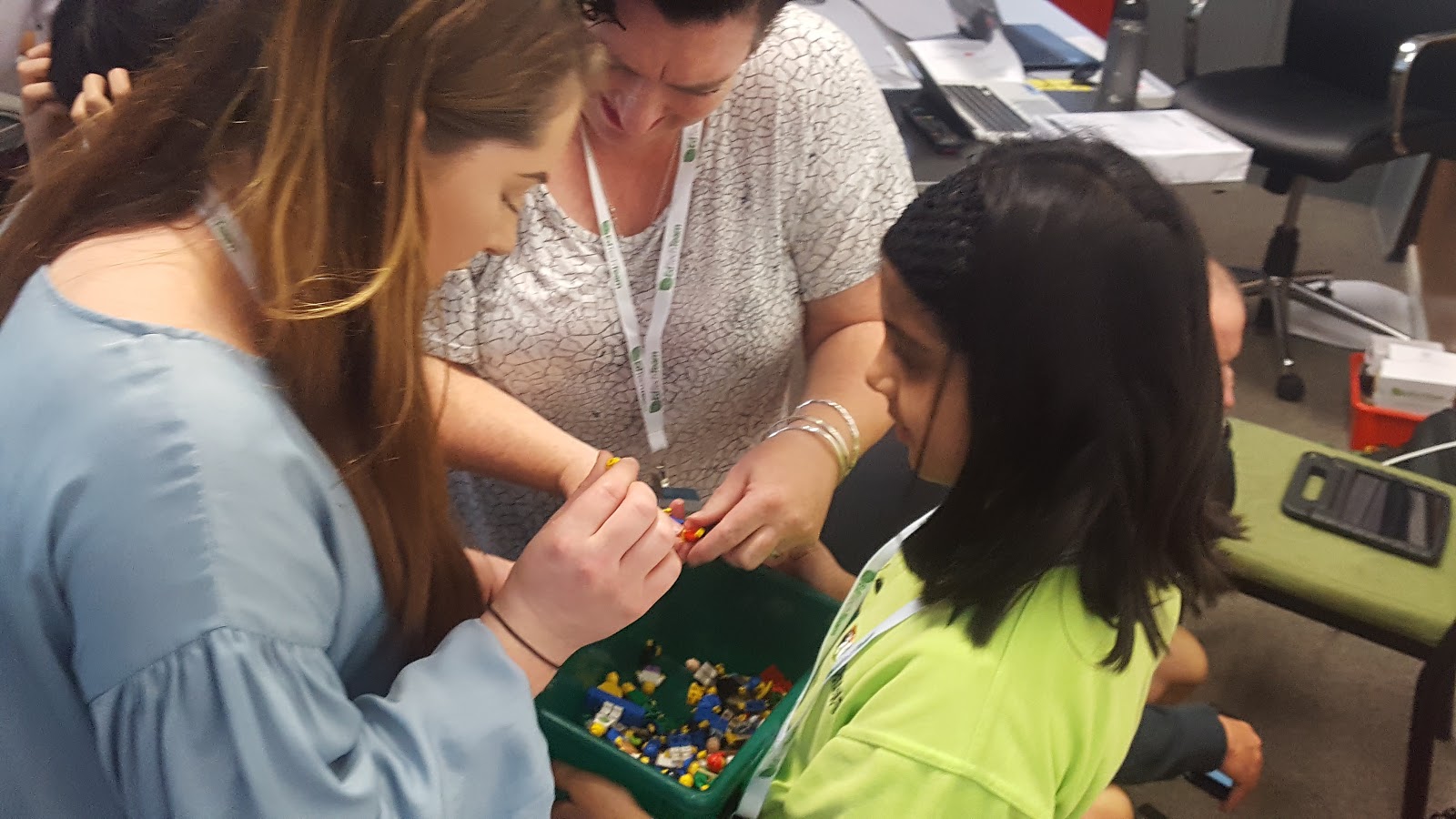
We had a busy term so our preparation was left to the last week of term. Maybe that was not ideal, but it was enough. The plan was to bring 16 of our learners and all four learning coaches from our Habitat. We had four presentations and they were all scheduled for the first day of the summit. We worked extremely hard over those five days at the end of the term. The learners actually were given a lot of leeway to come up with what they would say. I made the slides for the sessions and practiced with them, but for the most part they were on their own.


On the day, I was nervous and the children were nervous. We arrived fairly late due to one of our learners not showing up on time. I guess that was to be expected. We managed to get everyone lanyards and some nice free Google Cardboards courtesy of EdTech Team (who were extremely supportive of what we were trying to do for our learners).


For the most part the children weren't too interested in what the adults were saying (though some were) but they came prepared and even if they weren't listening, they all had a device to do something on while we adults were being inspired.


Overall, the children did an AMAZING job in the presentations. They were clearly nervous and some of them spoke extremely softly. Others forgot their lines or got mixed up, but the issues were minimal. Where they absolutely shone, though, was when they were helping out the adults at the sessions. Several of the children chose to stay back in the room with me and help out at the sessions that weren't theirs. They were so excited and happy that they knew more than adults and that they could show them how to do things they couldn't do. On the drive home, one of the girls told me that that was the first time that she had told an adult what to do.


The day was a complete success and the feedback from all four sessions was overwhelmingly positive. I'm excited to go back after the school holidays and see the effect it has on them.


An interesting side note to the whole day, was that they were clearly more up to date on some new features in YouTube than many in the audience - a fact that was continually brought up on the second day of the conference.

I'm so proud of all the learners who came with me to share. They were very brave and they took advantage of an opportunity that they were given. I definitely will look at increasing the frequency of events like this in the future.

Friday, August 4, 2017

ISTE (Round 3)

So once again I made the trip across the Pacific to the US of A to ISTE. After the first time over, it was hard not to make the trek again. There simply is nothing like it (at least that I've been to) over on this side of the world. This year, I felt like a veteran, knowing the best way to get the most for my time in San Antonio. I wanted to avoid wasting time listening to people talk at me and make some real connections with real people doing amazing things. I also had a long list of ISTE friends to reconnect with. A lot of people go to conferences to hear the latest new thing (and I definitely like learning about that stuff), but connections are more valuable to me, with some really innovative, off the wall ideas thrown in there.

There were some clear themes throughout the conference this year.  The most obvious thing that (it seems) everyone is doing is VR. So many different presentations and poster sessions included it. In particular, I did visit the CoSpaces booth and was quite impressed with the ability to create your own 3D environments. I'll definitely be watching their website for the educator and school accounts (I could be a bit off on the names, though). There's also some really cool new AR stuff coming from Google


I also had a lot of good conversations and got some good ideas from a lot of the big robotics companies: SpheroEdu, Wonder Workshop, Ozobots and a few others. They all have some pretty helpful STEAM activities and other lesson plan ideas that can be used. 


The same goes for some other companies that produce other technology things: OSMOLittle Bits and Bloxels stood out, as well as Microduino. There was a company that made some neat little robots called SAM robots, though I can't seem to find a website or pictures of those. As always, a visit to the Lego Education booth was one of the highlights (if I had a million dollars, I'd get two of everything!)


Though it was not as prevalent as years past, there were still lots of ideas for using Makey Makeys, both with the good people at the booth and with presenters. I did learn that you can have an output (eg, make a light flash), so that was kind of cool. Plus seeing what some learners have done with it was helpful to see how it could be used.


All of the above are definitely on my wishlist and would be super helpful in creating a fun and STEAMy classroom that engages my learners. Over the next few weeks/months, I'm going to look at how I can use what I've got to do these things, but also at ways of obtaining some more of these things.

But by far the most important thing from ISTE, as I mentioned above, was the people. Last year I met Shannon while we were each making our own binary bracelets on the first day. We then ran into each other multiple times over the course of the conference. Last year we said we would collaborate on something, but then never did. This year, if you can believe it, we ran into each other once again on the first day, and once again making binary bracelets (why both of us needed another one this year, I'm not sure). We caught up briefly and visited each others' presentations. Now, we've been talking about doing some sort of global collaboration project with each other this year and co-presenting at ISTE next year. So that's kind of cool. And hopefully putting it up here will also help me not forget to do it this year!


I've also made another handful of contacts of educators in the US who want penpals (have actually made contact with one, and planning on one or two more right after this blog post).  Furthermore, saw my friends from Kiva again and will be wanting to perhaps get some more things going on with them.

One of the big things that has come up in EdTech in recent years is the idea of ambassadors for certain companies. I'm definitely looking into a few as many companies do not have educators from New Zealand working with them that closely yet. Hopefully within the next few months I'll be on here writing about all the new connections I have (as well as my global collaborations).

To anyone who has never been to ISTE, my advice to you is GO! Chicago next year is a wonderful city and ISTE is an amazing experience. The incredibly inventive things you'll see and the inspiring people you'll meet (and in turn inspire yourself) is definitely worth the cost of getting there (and as an added bonus for NZ educators, you get a week of summer in the middle of winter). If you're interested in coming along next year, let me know and we can meet there! The site for Chicago is here. Calls for presenters open in less than a month!


Friday, May 26, 2017

Nature of Learning Conference

A few weekends ago, I was asked by the associate leader of learning at my school, Ormiston, to assist in presenting at the Nature of Learning conference which was being held at the neighbouring Ormiston Junior College. I was more than happy to join in and help out, as well as attend the other sessions.

The biggest learning for me in this process was actually preparing our presentation and our school tour. The group of us that was presenting talked over many of the founding ideas and principles that went into designing how our school works and functions. Particularly of interest was the OECDs 7 Principles of Learning put out in its Innovative Learning Environments Project. Our school tour was based around those seven principles while our other presentation was based around the other three elements of that report:
  • Action Learning
  • Guided Learning
  • Experiential Learning
What was quite interesting is that though I was previously mostly unaware of those 7 principles and three main areas, I found that I have been following the majority of them throughout my teaching career. Of the three main areas, we found that two of those are well developed or on their way to being well developed.


Action Learning fits in extremely well with our iExplore time, during which learners choose driving questions to answer and then work in small groups to answer them. As a habitat and as an individual I have been part of a very interesting journey with this idea over the last couple of years. My first go at it was something of a disaster, where we didn't even finish anything. Last year at a new school, I tried once again and was able to get some good, quality work from my students. This year at Ormiston I have been able to start sparking some projects that go well beyond the research and make a slide variety. We're getting some real, meaningful and deep projects.

Guided learning is basically the typical reading, writing and maths. And again, over the last few years, I have been individually and collectively on a journey to find out the best ways to do this. Am I there? Definitely not, but I feel like at the moment, we're giving the 90 learners in our habitat a variety of choices and opportunities to reach their potential.

The Experiential learning is what we are still working on, though the preparation for this presentation was very helpful in clarifying what that means.  Essentially how we have been running these is like topic, though we have been providing choice. Ideally, we should be giving our learners some sort of provocation and then let the learners explore what they want in that topic. The suggestion given was bubbles. Some learners may choose to do art with bubbles, some may learn about soap and how that works, others might look at light and why the colours are the way they are. Others still may want to look at why bubbles form or why they float. With many topics there could be several directions they could go.

Preparing the tour was also interesting. We created a series of videos or slideshows that could be viewed using QR codes throughout the school. You can find them all here, explaining how we use the 7 principles of learning daily at Ormiston Primary.


As for the presentations, I did find some of them difficult as they were all people talking and talking. Interesting that a conference on the way in which people learn is set up for only one way of learning. I did get some really good ideas and thoughts from some of the presentations. I attended a workshop from a school that has vertical teams, meaning instead of having all the Year 3-4 teachers in a team, they have Year 1-6 teachers. I thought that in an ILE a vertical Habitat would be a pretty interesting idea, with year 1s and 6s all in the same space. It also gives the potential of having the same learning coaches their whole time at a school while also having different peers every year.

Another helpful presentation I attended was from our friends on the other side of town, Hobsonville Point Primary. They discussed how their learners have individual time tables and how they get lots of community involvement in their workshops. This is something that we have not yet explored and is very relevant as we would rather have more small workshops to give better attention to interests than the ones we have at the moment. It's all food for thought and these are ideas that have been thrown into the constant churning of my brain. It was definitely an experience that has helped me think about what I do and why I do it.

Friday, May 5, 2017

Google Summits - Times Two!

This year I was fortunate enough to be accepted to present at both the Auckland AND the Wellington Google Summits put on by the Ed Tech Team.

Since the beginning of the year, as can be evidenced by my lack of posting regularly on here, I have been very busy and overwhelmed with the implementation of new ideas at Ormiston School where I was put into a habitat for the first time. So a lot of the drive that had previously been in me had slowly disappeared.

But these two Google Summits gave me my drive back. It's funny how you don't realize what's missing until you get it back, but I had mostly disconnected myself from my core online PLN and was suffering because of it. Coming back to these summits and spending four days with my tribe was extremely helpful in sparking my drive to make innovative change.


My four sessions went fairly well. Two were on how to use Mystery Hangouts (or Skype) in the classroom to connect with other classrooms globally and to promote critical thinking skills and problem solving, while the other two were on how to use Google Forms to make Choose Your Own Adventure stories. After some sessions last year that were more of me talking than of the participants actually, you know, participating, I made some changes and made sure that the majority of each session was a chance for my colleagues to try something new. For the Mystery Hangout session we ran a mock Mystery Hangout. For the Choose Your Own Adventure session we actually made our own Choose Your Own Adventures. Further to this, it gave me more ideas of what I could share in the future (and I'm going to keep some of that on the down low for now).


One tangent that these sessions sent me on was to create some sort of resource for teachers to connect with each other so that they can do a Mystery Hangout. I had used a padlet in my presentation to collect details of classrooms that might be interested, but on my long drive home from Wellington and after a suggestion from one of the attendees there, I am currently working on a small website for NZ teachers to find each other for these Mystery Chats (not trying to favour one over the other). So hopefully I'll find some time to complete that task soon and then share it with my PLN to get a global group of people who want to connect with NZ schools.

I also had the opportunity to attend several sessions at the summit which have led to some new thinking and tools for me to use in the classroom. Over the four days, I attended three (yes, 3) sessions related to Breakout EDU. Two which let me experience the game play (I've done it a few times before, admittedly) and once where we got the chance to brainstorm and look at the process of designing games. I'm actually quite interested in using this in the classroom (and we actually trialled it this week - but that's another blog post) so it was good to get my brain thinking about what we could do and how we could do it.


Another session I attended included using the G Suite Apps on iPads. This has long been an issue for me in the classroom/habitat. Often we say we have 40 some odd devices (for 90 learners, mind you) and 10 of those are iPads, which don't have the same functionality as chromebooks. However, we were given some tasks to try on the iPads and I managed to figure out how to do a variety of things on it that I had previously thought would be difficult to do.

There were also a few sessions on Computer Science and coding. One was a reiteration of the CS First session I attended last year, and this helped reaffirm the need for coding in the classroom. They have a variety of modules that learners can go through to practice coding. This got me thinking about the ways in which we can add coding to the curriculum and embed it through other subjects. I've made some tentative plans to work towards some practical, hands on coding in all areas. A second session I attended shared lots of resources for higher level coding. One resource that stood out in particular was the Khan Academy and Pixar joint venture: Pixar in a Box. Mainly geared towards older learners, there are certainly some aspects that can be used at the primary level. And don't think I haven't contemplated learning how to digitally animate and change careers! Probably not though...


I also finally attended a session put on by Angela Lee on Virtual Reality. Having worked with her for ages and ages, I've never actually gone to see her present. It was very helpful in that I now know how to use both Google Expeditions as well as another application that allows learners to make their own 3D virtual world: CoSpaces. These are two things that we're examining to add to our curriculum throughout as many areas as possible.

Overall, I was pretty pleased with the four days at the summits - and I quite liked the drive as well (it's always nice to see the green of New Zealand). It's given me a new focus going forward and sparked that fire in me that has recently been in hiding.

Friday, March 31, 2017

PMA Conference

Last Saturday I attended the 25th annual Primary Maths Association conference at the beautiful Waipuna Conference Center. Though I don't recall it being said (that of course, doesn't mean it wasn't said) there was a clear theme running throughout the day: Proportional thinking. Now this doesn't necessarily mean proportions, ratios and percent - but it does refer to multiplicative thinking. This, according to many speakers, is something we need to focus on as many learners are yet unable to think this way.

The keynote speaker, Shelley Dole, spoke of a three-step process of representing mathematical thinking for learners. The first is enactive - acting out the problems. This is probably something that is lacking in my practice at the moment. In the week since, I've tried to bring this back into my problem solving. The second is iconic - using diagrams or manipulatives that represent real life things. For example, this would be using things like counters, place value cubes, etc. I've been doing this to a degree, though including diagrams is something that I will work on adding (pun intended). The last is symbolic - which is using numbers and symbols to represent those mathematical ideas. This is something that we rely on quite a bit, and while necessary, it's important to remember that that doesn't have to be the only thing we do.

To be honest, a few of the big ideas in the sessions were not new to me, but it's always good to get a reminder of these things AND there were some practical things that I can use in my teaching.

One session I attended, called Learning Through Play, had a few ideas of things we as educators could use to make the learning of our learners more interesting. There was a lot of talk about using literacy to connect with mathematical ideas. A lot of this was about using stories to create math investigations. I like this idea, though it was very juniors based (read: Year 2 or under). It did remind me of the wonderful (American) resource of the Math Start books. Despite the obvious issues with the currency books, these are really great. I've brought my set back into school and am planning to share them with my learners shortly.

Another really important tip that was shared in this session was that learners should be encouraged to answer their questions in full sentences  - not just in one-word answers. The facilitator mentioned that this can have wonderful effects across all learning areas.

The last session of the day included a massive amount of practical real world maths problems. The facilitator gave us heaps of example questions using ratios and proportions that are real world problems. What I liked best about this session was that we had time to go around and have a go at solving them (note to any presenters out there: get us doing stuff or at some point, most of us will just tune out).

It was a good day to spark some thinking in me. I've always enjoyed math as a student, though that can be a challenge when it comes to teaching learners who don't share my excitement. I hope to use a good deal of the ideas in the coming weeks!

Thursday, August 25, 2016

ISTE 2016!

It has taken me a few weeks (almost a month, in fact) to fully come to grips with my ISTE 2016 experience. To sum it up in word: Amazing! But obviously there were some really good takeaways that came from the experience. I'll try my best to share all of what I learned, but no doubt some good stuff will get left out.

edit: Now it's almost two whole months after ISTE! But still thinking lots about it. Some of this may be repetitive because of the time between when I started writing and when I finished, but I think the tone that will likely be consistent throughout will convince you of the value this experience had for me and could have for you in the future.

People, People, People

The first place you need to start when dealing with ISTE is the people. I'm not talking about the sheer number (though that is staggering on its own). What I'm talking about is the people you meet. The biggest draw for something like ISTE is to meet lots and lots of like-minded and incredible people. And don't get me wrong, EVERYONE at ISTE is incredible. When I told one of the people I met that "I'm just a classroom teacher," she responded by saying that nobody is "Just" anything. We all have something to offer, no matter the title or experience. Though I did realize this before, it was interesting to see how our language can affect our perceptions (and the perceptions we create in others). Later on that day, I met someone who said pretty much the same thing about being "just" something. I was spurred on to share my new perspective.

There are also countless opportunities to meet and connect with educators around the world (well, mostly the US). There is so much value in this for all of us and our students who will benefit from these connections. I made a concerted and deliberate effort to seek out new people and talk to some who I wouldn't have otherwise spoken with - including the CEO of ISTE! I made several great connections which will help me make further connections in the future. It's all about the people. If that were the only result of the week in Denver it would have been worth it completely.

On top of meeting people at official conference events (probably the best source of that was the Global Ed Day - a great group of people to connect with, if you're looking), there were several social events which turned out to be just as valuable. I had made it my mission to find the "seedy underbelly of ISTE" this year, and while it definitely wasn't seedy, it made the conference that much more impactful. My only regret is that I didn't find more events to go to. In all, I attended events put on by Wonder Workshop (happy hour at a restaurant), the Ed Tech Team & Symbaloo (Karaoke), Gaggle (a party) and OSMO (a Sneak Peak event). All of those events, helping to strengthen my PLN (personal learning network for the uninitiated). I was able to build on some of the connections I made a year prior and hopefully will be able to build on these ones in 2017 (because yes, I'm going).

New Things and Old Things with More Pizazz

Having been at ISTE last year, I found that there were a lot of things repeated, but with more development. There were literally tons of resources (if you weighed them all together, there is no doubt of this) showing how makerspaces and making can be used in the classroom. Many people were sharing how they've been using their robots (many of which I bought last year after ISTE) and other cool gadgets in the classroom. For example, there were many people sharing what they've done with paper circuits (a shout out to Chibitronics & Spark Fun who both gave me some free samples to use in my classroom) as well as robots (guess who won a free kit from Hummingbird?) One really cool startup that was sharing in the expo was Hyperduino which had some really simple applications with their custom built arduino boards. They ran out of free samples by the time I got to their booth, but I may pony up the dough to get one.

It seemed like everyone had a Dash & Dot, Sphero & Ollie and Ozobots. Not to mention Makersaces. Perhaps this, too, was one of my big takeaways from the conference, and (since it's taking me forever to write this reflection) one of the things I've been most active promoting since I've returned. While I'm fully trying to gear up my classroom's Makerspace, ISTE this year has planted the seed of a big idea in my head. I'm working now to start #MakerEdNZ, a community of schools and teachers who are using Makerspaces in their classrooms. I'll write a long post about it later, but for now, just know that ISTE inspired me.

Global Connections

The only actual planned event I went to at ISTE was the Global Ed Day 2016. What a great group of people. Again, this is something I want to explore in much greater detail. Yes, we've done Twitter chats and Mystery Hangouts, but those connections are only on the surface (but again, much, much better than no connections at all). A lot of the talk around the Global Ed Day was starting collaborative projects between schools on different continents. This is another area for leadership within New Zealand, I feel, and something that is many people are primed for. We'll see what comes out of this, but perhaps someone reading this will take the call to arms and run with it. I only ask that you please include me.

Things I've Been Using

So it has taken me 2 months to get this far in my reflection. But that provides a great opportunity to reflect upon how those new things are going. Probably the most immediate thing I tried was Seesaw. For anyone who hasn't heard of this before, I urge you to have a look at it. I was lucky enough to have it explained to me by a teacher at the Seesaw booth in the expo. It's basically like Facebook for schools. Using the app (on tablets, phones or chromebooks) my students can take pictures or videos of their work, record an explanation over top of it, tag themselves in it and just generally share their amazing ideas. They can like each others' work and make comments - both written and oral! And I've only scratched the surface of what I can do with it. So far my students have found it super easy and have enjoyed sharing.

I also re-met my good friends at Kiva, which got me back to teaching the Kiva U curriculum (in the small amount of time that I can fit it in).'

I've also given my students focus with the Student Blogging Challenge. Though we may have been a few months late, meeting some of the people who have set this up, got me intrigued. My students have had some ups and downs with it (some of them spent a whole week or writing time making an avatar, not saving it, then making a new one), but overall it has helped teach them about blogging a bit more.

Another, practical thing I saw at ISTE and brought back to use were all the paper circuits that were being shown. I was extremely lucky to have been given those starter kits from Chibitronics AND Sparkfun, so I had a go with that at school AND at some educamps. It was interesting to say the least and something I want to look more into.  I was also given the chance to make a wearable circuit with some Lilypad Arduino components:


One of the sessions I went to was actually done as a walk around Downtown Denver. The presenter was telling us that we should be getting our students more active in class, and building movement into every activity. I had previously had swiss balls in my class but had given them up because of some behaviour issues. However, he inspired me to pump them back up and get my students moving more often. A small thing, but I think it's something that's important.

Conclusions

I could go on for pages and pages talking about how ISTE has changed me and my practice, but my biggest advice is: Go next year to San Antonio! It will change so many things about how you see teaching and give you so many ideas to help you do so. It will give you connections that will change your idea of teacher-teacher relationships and the way our profession should interact. It was honestly the best four days of the last year for me. Unlike a lot of the New Zealand based conferences that I've been to, ISTE has made me feel that we lone nuts are much stronger in numbers. It's nice to have our smallish group here, but expanding beyond our shores, in my opinion, is never a bad thing. Being part of something so big, is truly empowering. Meeting so many genuine people who only want the best for their students is inspiring. So, I urge all of you Kiwi teachers (and why not all my Canadian teacher friends as well, I belong to two countries), come with me next year! Come join my tribe!